This
is story of 74’s Peter Chesters who was killed on April 10th 1941
whilst executing a victory roll over Manston. Based on research by Simon
Muggleton with additional material by Craig Brandon.
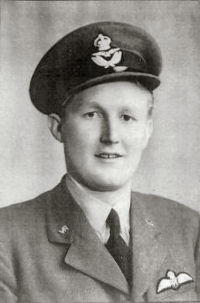 Born
on the 29th April 1919, Peter Chesters was the only son of William and
Kate Chesters, the family home being in Thorpe Bay Essex. Peter attended
Haileybury College in Hereford between 1933 and 1935, excelling in sport
as a member of the college rugby and swimming teams. He was an excellent
diver as well and he represented his College in shooting at Bisley in
1935. He was also a member of the Colne Yacht Club and after College
continued his interest in rugby by joining the club at Southend.
Born
on the 29th April 1919, Peter Chesters was the only son of William and
Kate Chesters, the family home being in Thorpe Bay Essex. Peter attended
Haileybury College in Hereford between 1933 and 1935, excelling in sport
as a member of the college rugby and swimming teams. He was an excellent
diver as well and he represented his College in shooting at Bisley in
1935. He was also a member of the Colne Yacht Club and after College
continued his interest in rugby by joining the club at Southend.
Peter's
father was in the silk trade (W C Chesters and Co.) in the City of London
into which he introduced his son. Peter spoke German and went to Germany
pre-war to carry on their business. John Freeborn recalls that what
he saw there shocked him and he developed a loathing of the Germans
which was reflected in the way he fought his war - that is, very aggressively.
Peter's father also kept Labrador dogs, helped by his son who had a
real passion for animals. This love of dogs would continue into his
RAF days and it was he who fed and looked after all the dogs associated
with 74. His sister Jean remembers an Alsatian he had which had to go
everywhere with him on the airfield and if he was airborne on a sortie
would wait patiently for him to return before he would settle.
An
interest in flying developed during weekend visits to Rochford aerodrome
and talking to the pilots. One of those pilots was John Freeborn who
recalls:
He
was always pestering the other pilots to teach him to fly. Eventually
he joined up and gained his Wings. He was a superb pilot, he loved
flying And we became very good friends. The Chesters’ house
was always ‘open house’ to the Tigers. On one occasion
Peter's father was in the north of England on business and called
in on my parents in Leeds, bringing them a full ham, a rare and valuable
commodity at that time.
Peter
was a very good shot and here he is seen at Bisley in 1935, seated on
the ground on the right. He was representing Haileybury College.
Peter
Chesters joined the RAFVR in June 1939 and was called up on September
1st. He was sent to 5 Elementary Flying School at RAF Sealand where
he met Frank Buckland and Charlie Pearce who were also destined to be
Tigers. They were all posted to 5 Service Flying Training School in
Canada and finally on September 16th 1940 to 7 OTU at Hawarden which
had not long been open and with primitive facilities which necessitated
their sleeping in tents.
The
first day at Hawarden consisted of lectures conducted by Wing Commander
Ira ‘Taffy’ Jones, 74’s World War I CO. Taffy was
always on the lookout for good pilots for 74 which he always considered
to be 'his' squadron and must have seen the potential in Chesters. In
fact all three were posted on 28th September 1940 to RAF Coltishall
where the Tigers were then based. They travelled to London from Hawarden
by train and arrived in the middle of an air raid. After an adventurous
taxi ride across the city they caught another train to Norwich, arriving
there late the following afternoon. Their first day on 74 was spent
watching other pilots practice the very hazardous head on attacks with
the help of three Wellington bombers. The three then practised circuits
and bumps for an hour.
Peter
Chesters' first patrol was on 2nd October in company with John Freeborn
and Brian Kirk (who would be shot down and killed within a month). Between
the 3rd and the 10th he flew sector recces and air drills. Sadly Frank
Buckland was killed on the 8th when he collided with Douglas Hastings
on a training flight. Frank had turned twenty just three weeks before:
Douglas Hastings had celebrated his first wedding anniversary the day
before. On the 13th Peter patrolled with John Freeborn again and with
Peter St John. On the 15th the Squadron were moved back to Biggin Hill.
Due to the constant bombardment the station endured accommodation was
scarce. Ground crew slept in a collection of wooden huts whilst aircrew
enjoyed the country home of Warren Smithers MP. For food and entertainment
they frequented The Crown at Knockholt.
After
a spell of leave Peter returned to fly a patrol on October 21st and
thereafter it was a matter of being scrambled almost daily on interceptions.
Six days later he claimed his first victory. A Flight was ordered off
at 0750 hours with instructions to rendezvous with 66 Squadron and patrol
the Maidstone area at 30,000 feet. Whilst flying over Ashford thirty
Me109s were spotted and intercepted, Sailor Malan leading the attack
out of the sun. Chesters was flying as Yellow 4 in P7494 and quickly
singled out a Messerschmitt. His Combat Report tells us what happened.
The
enemy aircraft which I attacked was diving down to the clouds and
I followed him. He saw me and tried to get on my tail. I managed to
turn inside him and put a burst into his engine causing it to stop.
I jockeyed him earthwards and he landed on Penshurst Aerodrome with
his wheels in the ‘up’ position. I fired two three second
bursts at 150 yards. As I did not know my position and was short of
petrol I landed on the same aerodrome. This engagement took place
at 3,000 feet.
John
Freeborn completes the story, this part of which was not included in
the report.
After
shooting down the 109 Peter landed beside the aircraft and dragged
the German pilot from his cockpit. He promptly spat in Peter's face
telling him he had run out of fuel. A fistfight started with Peter
and the Luftwaffe pilot swearing at each other in German. It was only
broken up with the arrival of a police officer, a soldier and someone
from the ARP. Peter managed to pull off the Iron Cross from the pilot's
jacket as a souvenir but was made to return it by the policeman. Peter
demanded a trophy and took the first aid kit from the cockpit of the
109 which he kept in his Spitfire from then onwards.
The
German was Feldwebel Lothar Schieverhofer and his unit was 3/JG 52.
This was the only victory Chesters could claim during the Battle of
Britain, the official date for the ending of which is 30th October 1940.
This didn't mean that the tempo lessened for 74 - far from it - and
it was from that date that the Luftwaffe's tactics began to change.
By
this time Chesters was well established in the squadron and was known
as a practical joker. For example on one occasion he bombarded his fellow
pilots with meteorological balloons filled with water as they ran from
the dispersal hut in response to a phoney scramble. But the trick only
worked once for those pilots had their revenge when, fooling around,
he managed to get himself wedged between the walls of a hut and the
surrounding blast barrier. His comrades relieved themselves on him before
helping him out! On another occasion he splashed John Freeborn as he
drove by and John exacted immediate revenge by reaching for the nearest
shotgun and chasing him up a tree before peppering his backside with
pellets!
Patrols
continued throughout November and interceptions of enemy formations
were common as the Luftwaffe continued their fighter bomber attacks
on British airfields and other targets, the Tigers claiming numerous
victories in the process. A further kill eluded Peter Chesters for the
moment though. On the 27th in a dog fight over Chatham he was bounced
by three Me109s, his Spitfire receiving many hits and badly damaging
the controls. Chesters himself suffered wounds and burns to his right
leg. He stayed with his aircraft until he was clear of built up areas
and finally took to his parachute over the Essex countryside, his aircraft
(P7306) crashing into the mud of Blacketts Marshes. He landed in mud
at Conyer Creek himself and began to sink thanks to the weight of his
Mae West and flying clothing. The local ARP warden, Bob Hodges, saw
the whole incident and ran to help him.
I
rushed over to the edge of the creek and began walking over the mud.
I had learned the technique of squishing my feet in circles to avoid
being sucked down. I reached the pilot who was sinking fast and badly
injured in one leg. But he was still conscious and I put my arm round
his neck and pulled. I couldn't pull him up at first because of his
boots but after they came off we struggled together. I pulled him
clear and took him to my house in Conyer. We gave him a bath, got
some dry clothes and called Orpington Military Hospital who came to
get him.
Peter
Chesters later sent Bob Hodges a watch inscribed:
R.
Hodges. With grateful appreciation from Pilot Officer Chesters. 27.11.40.
When
he was in hospital Chesters was visited by his friends on the squadron,
John Freeborn and Wally Franklin included. By now he was well on the
road to recovery and they were able to take him out. John Freeborn recalls:
We
took him for a trip to London in Franklin's car. Whilst driving along
the Old Kent Road we saw a mounted policeman who had stopped at red
lights. We drew up beside him and Peter leant out of the window and
hit the horse on its rear making him bolt!
Peter
Chesters returned to flying on 17th January 1941 and quickly became
involved in the ‘Circuses’ the squadron were now undertaking,
acting as fighter escort to bombers with the objective of enticing the
Luftwaffe into the air. Standing patrols also continued and on February
5th Chesters was one of the six aircraft of A Flight that took off to
patrol at 10,000 feet over Dover.
I
was flying No 2 in Yellow Section when we sighted a Do215 south of
Dover. Red 1 (Malan) made three attacks. When Red 1 had finished Yellow
1 (Freeborn) and myself attacked. Both of us delivered beam attacks,
Yellow 1 from the port side and myself from the starboard. About three
quarters of the way through this attack the e/a ceased to return our
fire. I then delivered another attack from astern whilst Yellow 1
did a beam attack from the starboard. The port engine of the e/a blew
up as I fired at point blank range. I delivered my third attack from
the port beam and finished the attack from astern. My ammunition ran
out when I was about 70 feet from the sea and the e/a crashed in.
When the e/a was about 200 ft from the water one of the crew climbed
out on to the port wing stub whilst I was firing. He dropped off before
the e/a crashed. I fired 2 four second bursts and one eight second
burst but my No 1 port gun jammed after 175 rounds had been fired.
The
aircraft concerned was probably a Do17-Z-2 (often misidentified as a
Do 215) of III/KG/2 captained by Fw Walter Gottschlich. Chesters was
awarded a shared kill.
January
became February and February moved into March 1941. Chesters was involved
in various actions but made no further kills. There was a diversion
from the routine in early April when he, John Freeborn and Peter St
John flew a Blenheim from Manston to West Raynham. 101 Squadron had
been operating alongside the Tigers but when they relocated to the Norfolk
airfield one damaged aircraft was left behind so that repairs could
be completed. It was this aircraft which the trio flew up. Whilst there
they were given the chance to fly in a Wellington Mk II.
April
10th was a day of fighter sweeps over Kent. Peter Chesters’ first
such patrol was at 0935. Then at 1125 he was airborne with Sgt York
on a convoy patrol which lasted just under two hours, landing in time
for lunch. At 1645 12 Spitfires were ordered to patrol the Folkestone
area, Chesters flying P7854. A number of Me109s were seen in the area,
escorting bombers on their way to Canterbury and 74 dived on them. Peter
engaged an Me109E, Black 8, of the 2nd Staffel of Jagdgeswader 51 piloted
by Friedrich Maoller. He shot it down and it crashed at Frost Farm,
St Nicholas Wade, killing the pilot. Such victories were now rare and
Peter Chesters was so jubilant with this success that he attempted the
forbidden victory roll over Manston aerodrome on his return. He misjudged
his height and crashed on to the parade ground. He was killed instantly.
John
Freeborn still recalls his friend Peter Chesters clearly.
He
was a good pilot and a good shot but subject to moments of carelessness,
of disregard for his own wellbeing. One such moment was after his
latest success in the air. He came back over Manston and roared across
the airfield at low altitude, attempted the victory roll, stalled
and ploughed in inverted. He had an element of eccentricity, even
madness about him. A slow roll at low altitude in an aircraft which
had possibly suffered battle damage was an extremely hazardous and
silly thing to do. Only his family attended the funeral. No-one from
the Squadron could bear to go as Peter was so well liked and it was
very upsetting how he died.
The
funeral was at Sutton Road Cemetery Southend on April 17th 1941. He
is honoured on the oaken reredos at St George's Chapel of Remembrance
at Biggin Hill.